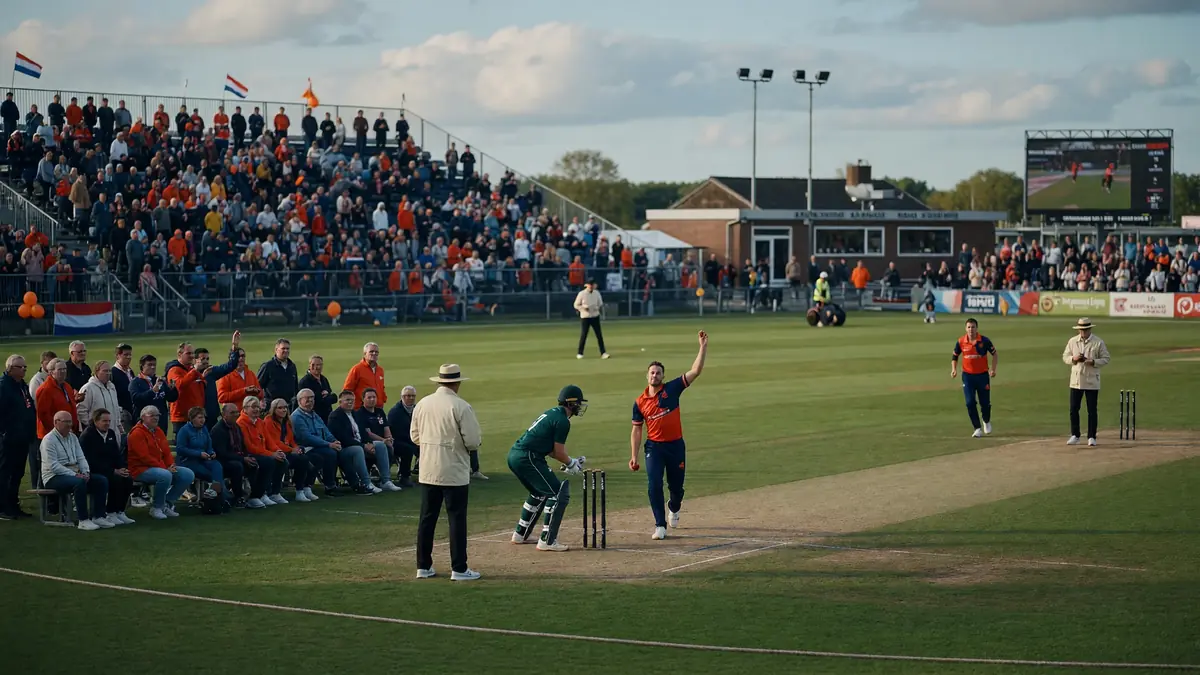
Bas de Leede Takes Over as Netherlands Captain After Scott Edwards Steps Down
Seam-bowling all-rounder Bas de Leede has taken charge of the Netherlands men's side after Scott Edwards ended a four-year captaincy run that closed with the Utrecht leg of the Cricket World Cup League 2 series.
Bas de Leede is the new captain of the Netherlands men's cricket team. The appointment follows Scott Edwards' decision to step down after four years in charge, with the change taking effect once the Utrecht round of Cricket World Cup League 2 fixtures finished on Friday.
In a KNCB statement released with the announcement, de Leede paid a clear public tribute to his predecessor. He said Edwards had done a great job, praised him as a clear communicator, and noted that Edwards had taught the side to trust its own abilities. De Leede also underlined that he is glad Edwards will remain available as a player, keeping the wicketkeeper-batter inside the group rather than outside it.
The timing is deliberate. Edwards' ODI captaincy began in June 2022 after Pieter Seelaar retired from international cricket because of back issues. That tenure covered 56 one-day internationals and ended only after the home League 2 games in Utrecht. From here, de Leede will lead the Netherlands through the remainder of the CWC League 2 cycle.
Why the captaincy changed now
A four-year run closed on home soil after the Utrecht League 2 leg.
Edwards did not leave after a single bad week. He left after a sustained stretch in which the Netherlands punched above associate expectations on the biggest stages available to them. Under his leadership the side won 24 of 56 ODIs. Those wins included two results that still sit near the top of modern Dutch cricket memory: the 2023 World Cup victories over South Africa in Dharamsala and Bangladesh in Kolkata.
The white-ball record in the shorter format is just as central to how the side will remember him. Edwards captained 50 T20 internationals and guided the Netherlands to the Super 12 stage of the 2022 T20 World Cup. Along the way came wins over Zimbabwe and South Africa — the latter result helping knock South Africa out of that tournament. That is the standard de Leede inherits, not a rebuild from zero.
Closing the captaincy after the Utrecht leg also keeps the logistics clean. The home games are done. The next block of League 2 work still lies ahead against Oman and the UAE later this year. A mid-cycle change after a completed home round gives the new captain a defined runway without interrupting a live series midstream.
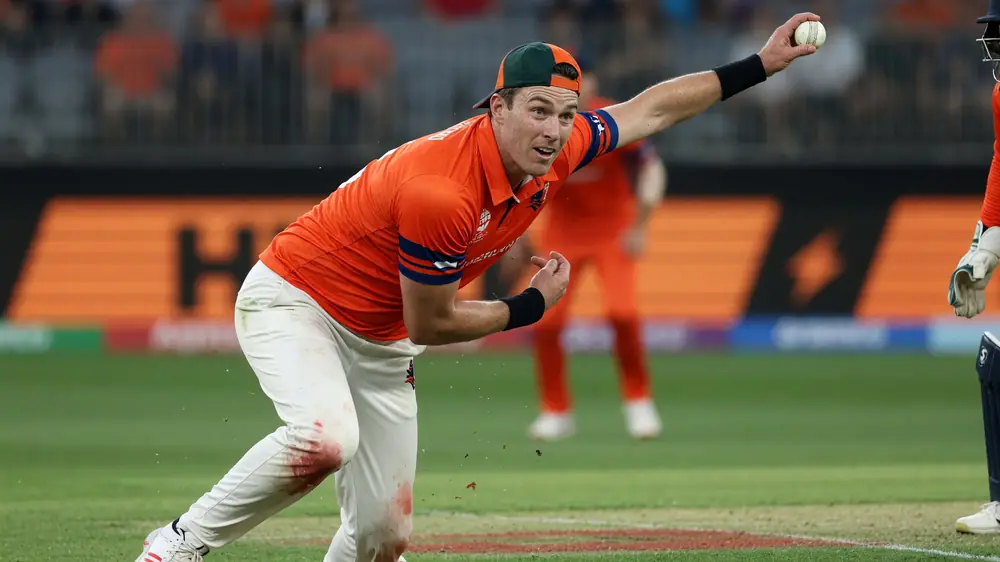
De Leede steps up from inside the XI
The appointment keeps leadership with a seam-bowling all-rounder already trusted in both batting and bowling roles across the League 2 campaign.
What de Leede said about Edwards
Public praise, not a quiet handoff.
Leadership changes in associate cricket can turn stiff and formal. This one did not. De Leede's KNCB remarks stayed specific. He called Edwards a clear communicator. He credited him with teaching the group to rely on its own abilities rather than wait for conditions or opposition mistakes to decide a match. He also described Edwards' recent performances in the Utrecht World Cup qualifier games as phenomenal, separating the captaincy decision from any suggestion that form had forced the issue.
That last point matters for how the dressing room will read the move. Edwards is not being eased out after a slump. He is stepping aside while still contributing enough with the bat and gloves for the new captain to want him in the XI. De Leede made that preference explicit: he is glad Edwards remains available as a player. Continuity of personnel is part of the plan, even as the armband changes hands.
There is a family note in the wider Dutch setup as well. Bas de Leede's cousin, Babette de Leede, captains the Netherlands women's team, which played its first Women's T20 World Cup in June. The men's and women's sides remain separate programmes, but the overlap underlines how thin and tightly connected the Dutch international pathway still is.
Edwards' four years in hard numbers
Fifty-six ODIs, fifty T20Is, and two World Cup statements.
Strip the emotion out and the ledger is still strong for a side that spends most of its calendar outside the Full Member circuit. Twenty-four wins from 56 ODIs is a competitive return when many of those fixtures are ladder games against well-drilled associates and the occasional Full Member exam. The 2023 ODI World Cup wins over South Africa and Bangladesh were not consolation prizes; they were results that changed how opposing camps prepared for the Netherlands.
The T20 side of the ledger carries similar weight. Fifty matches as captain, a Super 12 appearance in 2022, and a win over South Africa that altered that tournament's qualification picture gave Edwards a legacy that will outlast the job title. De Leede's tribute line about phenomenal recent form in Utrecht also suggests the outgoing captain is handing over while still adding value on the field, not after a long fade.
Context for the appointment still runs through Pieter Seelaar's exit. Seelaar's retirement from international cricket with back issues opened the job in June 2022. Edwards took it then and held it through a full World Cup cycle and deep into the current League 2 campaign. Four years is a long run in associate captaincy terms, where series are irregular and every global event carries outsized pressure.
Where the Netherlands sit, and what de Leede inherits
Second place, a live qualification path, and unfinished away work.
The competitive backdrop is straightforward. The Netherlands currently sit second in Cricket World Cup League 2 behind leaders the United States. The top four sides earn direct entry into the World Cup qualifier. That is the prize still on the table for de Leede's first stretch in charge.
The remaining assignments are not decorative. Later this year the Dutch still face Oman and the United Arab Emirates. Those are the kind of League 2 ties that decide whether a side controls its own qualifier path or spends the back end of the cycle chasing net run rate and other people's results. De Leede's brief is therefore immediate: keep the side in the top four conversation while absorbing a leadership change without dropping points it cannot afford.
Having Edwards available as a senior professional should help that transition. Wicketkeeper-batters who have already captained through World Cups tend to stabilise chase plans and field settings even when someone else holds the armband. De Leede's public insistence that Edwards stays in the group reads as a practical squad decision as much as a courtesy.
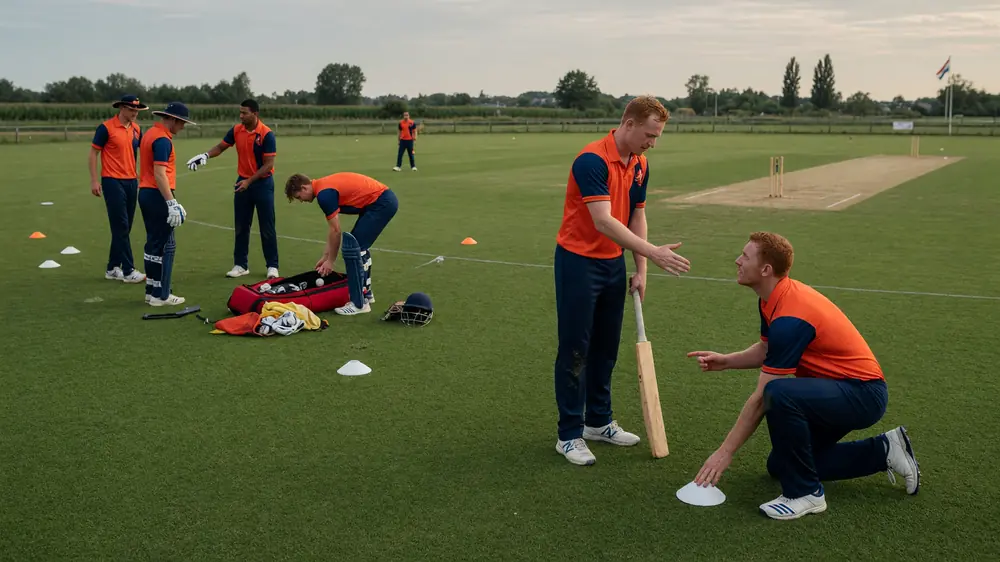
Oman and UAE still to come
League 2 leaves little room for a soft landing. The new captain's early results will be measured against a table that already has the United States out in front.
What kind of leader de Leede is likely to be
A seam-bowling all-rounder with skin in both disciplines.
De Leede is not a specialist captain drafted in from outside the XI. He is a seam-bowling all-rounder whose value already sits in multiple phases of a white-ball game: middle-overs control with the ball, lower-middle-order runs, and the physical workload that comes with being available across formats. Captains with that profile often set fields and bowling changes from lived experience rather than from a notebook alone.
The public language he chose after the appointment also offers a tell. He did not open with personal ambition. He opened with Edwards' communication, Edwards' insistence that the side trust its own game, and Edwards' recent output in Utrecht. That sequence suggests a leader who wants continuity of method. If the dressing room already buys the idea that Dutch cricket wins by backing its own skills under pressure, de Leede appears intent on keeping that idea intact.
There is no public indication in the announcement material of a wider coaching reset or a selection overhaul tied to the captaincy change. The stated scope is narrow and concrete: de Leede captains from the remainder of the CWC League 2 cycle, Edwards remains a player, and the side's immediate targets stay locked on qualifier pathways. Anything beyond that would be guesswork, and the facts available stop at the KNCB statement and the table position.
Why the change matters beyond one armband
Associate cricket runs on scarce leadership depth.
Full Member sides can rotate captains across formats and still call on large leadership groups. Associate sides rarely have that luxury. When Edwards took over from Seelaar in 2022, the Netherlands were already managing a thin senior core. Four years later, the fact that the board can move the armband to another established international without gutting the XI is itself a sign of progress.
Keeping Edwards available also avoids a second problem common in smaller programmes: the sudden disappearance of match intelligence. A captain who has set fields against South Africa and Bangladesh at a World Cup carries information that does not live in spreadsheets. De Leede's tribute, and his explicit wish that Edwards stay selectable, treats that knowledge as an asset rather than leftover hierarchy.
For readers who follow the qualification map more than the personalities, the practical stake is simpler. League 2 is still live. The United States lead. The Netherlands are second. Oman and the UAE are still on the schedule later this year. A calm captaincy transfer after Utrecht is useful only if the results column keeps pace with the table math.
How the Dutch captaincy reached this point
From Seelaar's exit to de Leede's appointment.
The short history runs in four beats. Pieter Seelaar retired from international cricket because of back issues. Scott Edwards took over the ODI captaincy in June 2022. Over the next four years he led 56 ODIs and 50 T20Is, collected those World Cup scalps, and carried the side through the current League 2 programme. After the Utrecht leg finished on Friday, he stepped down, and Bas de Leede was named to lead from the remainder of the cycle.
Nothing in the available record frames the move as a sacking. The tone from de Leede is collegial. The on-field retention of Edwards is explicit. The competitive situation remains a top-four chase rather than a crisis rebuild. Read together, those facts point to a managed succession at a natural break in the home calendar.
The next evidence will not arrive in another statement. It will arrive in the League 2 results against Oman and the UAE later this year, and in whether the Netherlands can hold second place — or better — while a new captain settles into the job with his predecessor still in the XI.
For more match desk notes, captaincy reads, and white-ball qualification coverage from the same editorial team, visit the sports arena blog.
Common questions about the Netherlands captaincy change
Who is the new Netherlands men's captain?
Bas de Leede, the seam-bowling all-rounder, has taken over as captain of the Netherlands men's team after Scott Edwards stepped down.
Is Scott Edwards leaving the team completely?
No. De Leede said he is glad Edwards will remain available as a player, so the outgoing captain stays in the squad picture.
When did Edwards' captaincy end?
Edwards' captaincy ended after the Utrecht leg of the Cricket World Cup League 2 games on Friday, closing a four-year run that began in June 2022.
How many ODIs did Edwards captain?
He captained the Netherlands in 56 ODIs, winning 24 of them, including 2023 World Cup victories over South Africa in Dharamsala and Bangladesh in Kolkata.
What is de Leede's immediate job?
He will captain through the remainder of the CWC League 2 cycle, with the Netherlands currently second behind the United States and still due to play Oman and the UAE later this year.
How is Babette de Leede connected to the story?
Babette de Leede, Bas de Leede's cousin, captains the Netherlands women's team, which played its first Women's T20 World Cup in June.